Show summary Hide summary
- Tesla’s new patent: what the fan-assisted diffuser is about
- How a fan-assisted diffuser could affect Roadster performance
- Where this idea fits in auto aerodynamics history
- Practical hurdles: energy, noise, rules, and reliability
- How Tesla might control the system with software
- Possible rollout: which models could get fan-assisted diffusers?
- Market implications for Tesla and rival EV makers
- What to watch next for confirmation and testing
Tesla has filed a patent for a fan-assisted diffuser that could change how its high-performance cars manage airflow. The idea pairs active suction with underbody aerodynamics to boost grip. Engineers and fans are now debating whether this clever device will land on the Roadster or other fast Teslas.
Tesla’s new patent: what the fan-assisted diffuser is about
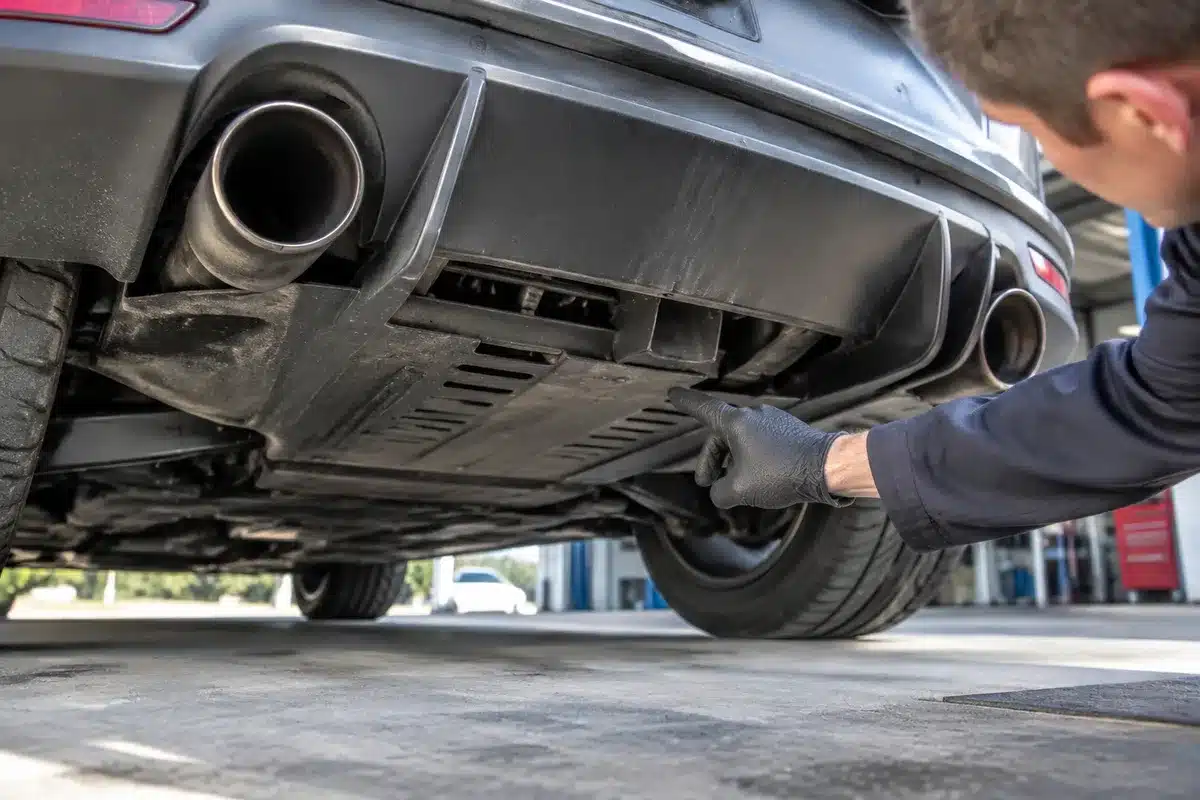
The patent describes an underbody system that uses fans to manipulate air pressure beneath the car. By lowering pressure under the rear, the system can increase downforce without big wings. That lets a car keep aerodynamic efficiency while gaining cornering grip.
Jet-powered Harley rockets to 60 mph on pure thrust: twin diesel jets, no drivetrain
Expensive gasoline pushing drivers to electric vehicles: will you switch?
- Active suction: fans draw air through channels under the vehicle.
- Diffuser integration: the device works with the rear diffuser to smooth and accelerate airflow.
- Variable control: the system can adjust output based on speed and driving mode.
How a fan-assisted diffuser could affect Roadster performance
More downforce at low speeds could translate to better traction out of corners. That improves lap times and driver confidence. The Roadster, built as Tesla’s halo car, would gain sharper handling without a constant drag penalty.
Key performance gains to expect
- Higher cornering speeds thanks to extra grip.
- Improved stability under braking and acceleration.
- Maintained top-speed efficiency when fans are deactivated.
Where this idea fits in auto aerodynamics history
Fan-assisted aerodynamics isn’t new. Racing cars and niche road cars have experimented with active ground-effect systems. Tesla’s take aims to merge that heritage with EV-specific controls and packaging.
- Historic precedents show big performance upside.
- Modern EVs add software control and energy-management options.
- Tesla could use electric motors to spin fans with precise timing.
Practical hurdles: energy, noise, rules, and reliability
Adding fans raises technical questions. Fans use power and add mechanical complexity. They may also create audible noise and need durable sealing against road debris.
- Energy trade-off: fans draw electricity from the battery pack.
- Regulatory risk: road rules or motorsport bodies could limit active suction systems.
- Durability concerns: moving parts near the road require protection and maintenance.
How Tesla might control the system with software
Tesla excels at integrating hardware and software. The patent hints at intelligent control logic tied to vehicle speed, driver mode, and battery state. That allows fans to run only when the net gain outweighs energy use.
- Automatic activation based on telemetry.
- Driver-selectable performance profiles.
- Fail-safe modes that disable the system if faults appear.
Possible rollout: which models could get fan-assisted diffusers?
The Roadster is the obvious candidate for early adoption. But Tesla could adapt the concept to Model S Plaid or future performance variants. Scaling the system depends on packaging and cost.
- Limited-run halo models may get prototype versions first.
- High-performance trims could adopt a refined, cheaper variant.
- Mass-market cars would need simpler, more robust designs.
Market implications for Tesla and rival EV makers
If Tesla brings this to production, rivals will watch closely. Active aerodynamics can redefine the trade-offs between efficiency and performance. Carmakers aiming for track-capable EVs may pursue similar paths.
- Competitive edge: unique aero tech enhances brand halo cars.
- Supply chain impact: new parts and sensors create supplier demand.
- Motorsport influence: rules may adapt to allow or ban such systems.
What to watch next for confirmation and testing
A patent does not guarantee a production feature. Watch for prototype sightings, regulatory filings, or Tesla service manuals that mention active underbody hardware. Track testing would be the clearest sign a system is ready.
- Spy shots showing ducting and fan housings.
- Official Tesla parts catalogs or service bulletins.
- Track lap time improvements from a validated demo.