Show summary Hide summary
Waze is rolling out a set of updates that reshape how the app guides you on the road. New features promise routes that learn from your habits, a motorcycle-aware navigation mode, quieter voice guidance, and smarter voice-driven search and reporting powered by AI.
Routes that learn your driving habits
Waze now offers personalized navigation that adapts to the routes you prefer. The app analyzes your past trips and surfaces the options you’re likely to choose.
BMW F 450 RR gets race-ready styling: entry-level power, pro looks
Jet-powered Harley rockets to 60 mph on pure thrust: twin diesel jets, no drivetrain
- Prefer highways over side streets? Those routes appear first.
- Like avoiding tolls or ferries? The app factors in your tendencies.
- You can still pick any alternate route manually.
- Personalization is optional — it can be switched off anytime.
The personalized routing feature is launching globally in phases, so many users will see it appear in their app soon.
A “less chatty” mode for fewer interruptions
For users who want fewer voice prompts, Waze adds a less chatty mode.
- It trims nonessential announcements.
- Critical alerts — hazards, upcoming turns, and lane changes — remain audible.
- The setting is ideal for drivers who prefer music or podcasts over frequent directions.
The quieter profile is available now as part of the current rollout.
Motorcycle mode: routing built for two wheels
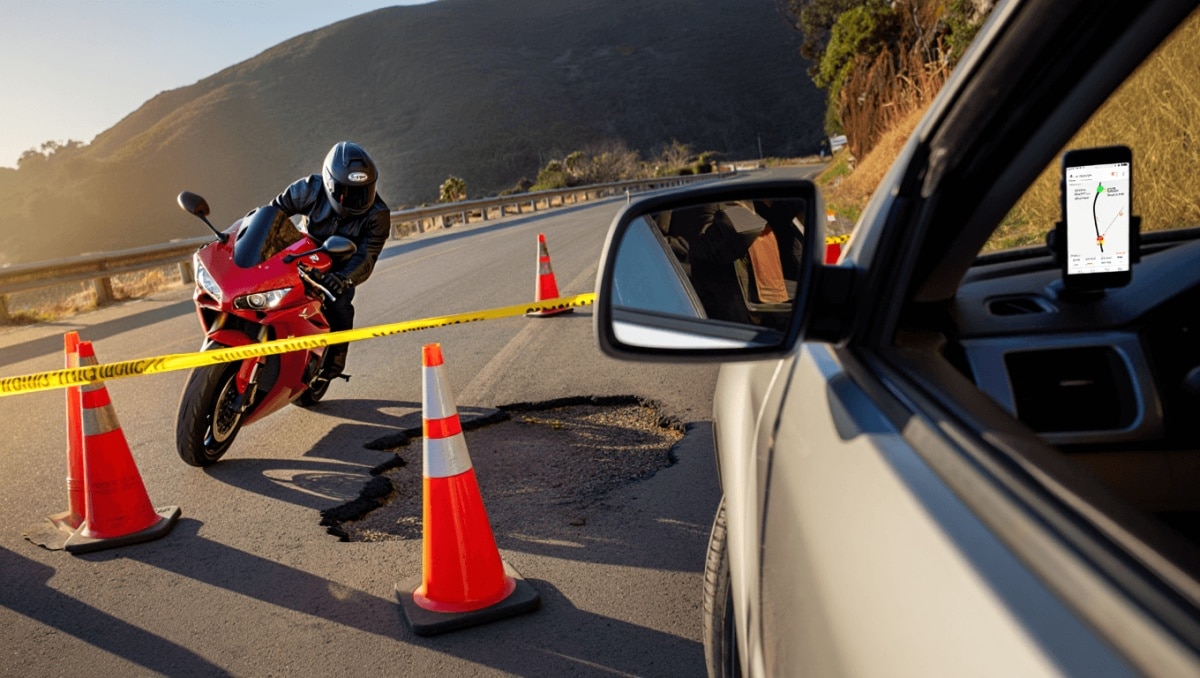
Waze now recognizes that a motorcycle needs a different kind of guidance. The new motorcycle mode picks routes better suited to riders.
What it prioritizes:
- Narrow streets where bikes can move faster than cars.
- Avoiding rough pavement when possible.
- Highlighting hazards that particularly affect motorcycles.
Reported hazards include potholes, speed bumps, raised crosswalks, and similar obstacles. Those items will be shown on the map and in notifications when relevant.
Waze credits a mix of live traffic data and a specialized group of motorcycle map editors for the feature’s accuracy. The initial launch covers several countries, including Argentina, Brazil, Colombia, Malaysia, Mexico, Peru and the Philippines. Wider availability is planned.
Conversational reporting and smarter searches with AI
Waze is expanding its AI toolkit. Building on its Gemini integration, the app introduces Conversational Reporting and voice-driven destination search.
- Witness a road closure? Say “The road is closed here,” and the app drafts a report.
- Reports are sent to local map editors for verification and mapping updates.
- Ask the search voice icon for practical queries like:
- “Find me a coffee shop that’s open right now.”
- “Find parking near Grand Mall.”
- “Find the nearest gas station with the cheapest prices.”
When you ask, Waze can suggest destinations even if you don’t enter a specific address. That functionality resembles Google Maps’ Ask Maps feature and is currently rolling out to Waze’s beta community.
How the updates change daily navigation
These enhancements aim to make Waze both less intrusive and more helpful. Personalization cuts down on repetitive choices. Motorcycle mode brings rider-specific safety cues. Conversational tools let users report and find places by voice.
- Drivers get fewer unwanted prompts and smarter suggestions.
- Riders gain visibility into hazards that cars may not notice.
- Local map editors remain key to verifying changes reported by users.
Expect the features to expand gradually as Waze refines machine learning models and grows its editor community.